Occupational Fraud 101
As a catalyst for business growth, the Chamber is committed to equipping members with tools to protect their organizations and strengthen internal practices. June’s luncheon provided a practical, eye-opening look at occupational fraud, including what it is, how it happens, and how to prevent it.
Dawn Myers of Myers Forensic Accounting Services drew from her experience as a Certified Fraud Examiner to explain how fraud schemes develop and why they are often difficult to detect. She shared that organizations lose an estimated five percent of their annual revenue to fraud and outlined the three elements that typically define a fraudulent act: false representation, reliance, and resulting harm.
Through real-world examples, Dawn emphasized that fraud can occur in any setting. Cases ranged from a part-time secretary who embezzled $1.7 million to a bakery accountant who stole $18 million to fund extravagant travel. These stories illustrated the serious consequences of weak oversight and inadequate safeguards.
The presentation outlined the three most common types of occupational fraud: asset misappropriation, financial statement fraud, and corruption. Myers discussed common red flags, contributing factors, and the importance of ethical leadership. She encouraged businesses to take preventative action by regularly reviewing financial statements, separating financial duties, conducting background checks, and fostering a culture of accountability.
You may now download the PowerPoint below.
About our Speaker:
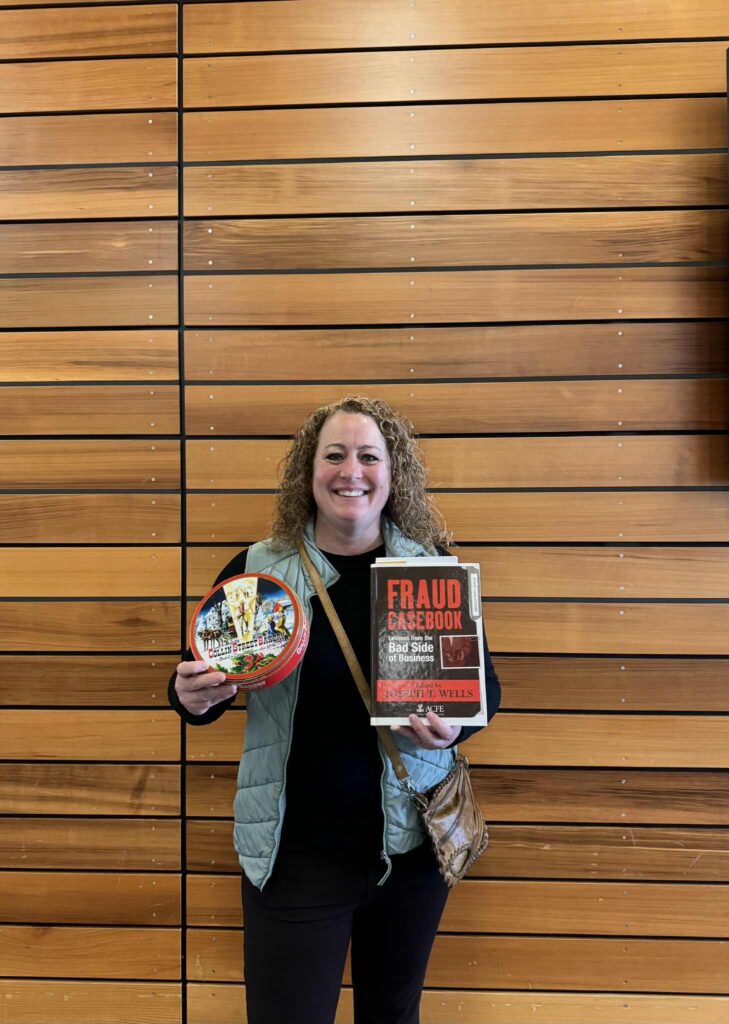
Dawn Myers, Myers Forensic Accounting Services
A proud Shelton native, Dawn Myers is a graduate of Shelton High School. She holds a Bachelor’s degree in Accounting from Saint Martin’s University and a Master’s in Forensic Accounting from Stevenson University.
Dawn is both a Certified Public Accountant (CPA) and a Certified Fraud Examiner (CFE). Her professional background includes 25 years of accounting experience spanning the utility, telecommunications, and state government sectors. She brings a wealth of knowledge in financial systems, regulatory compliance, and organizational accountability.